
International Scientific Conference
on Information Technology, Computer Science, and Data Science


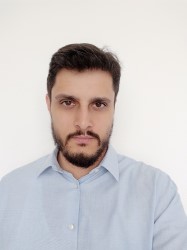
Assistant Professor, Department of Geodesy and Geoinformatics, Faculty of Civil Engineering, University of Belgrade
Biography
Slobodan Jelić is an Assistant Professor at the Department of Geodesy and Geoinformatics, Faculty of Civil Engineering, University of Belgrade. His academic work focuses on machine learning, artificial intelligence applications, combinatorial optimization, and approximation algorithms, with particular emphasis on the use of data-driven methods in geoinformatics and remote sensing. His research explores topics such as domain adaptation in spectroscopy data analysis, intelligent processing of geospatial datasets, and the development of efficient algorithms for complex computational problems. He is the author of over 20 publications in scientific journals, monographs, and conference proceedings.
Alongside his research activities, Slobodan Jelić has a strong teaching portfolio in computer science and applied mathematics. He teaches courses in machine learning, computer vision, information retrieval, and web programming, where he combines theoretical foundations with practical software development and modern data-analysis tools. His work aims to bridge the gap between algorithmic theory and real-world data-centric systems.
Beyond academia, Slobodan Jelić is the founder of the private data science and data engineering agency CrossValid. Through CrossValid, he collaborates with industry partners on the design and implementation of advanced data platforms and AI-enabled analytical solutions. His work includes building scalable data pipelines and intelligent workflows using modern open-source technologies, particularly within the Apache ecosystem, such as Apache Airflow and Apache Superset, enabling organizations to transform complex data into actionable insights.
Keynote speech title
Transfer Learning Across Domains: From Environmental Monitoring to Geospatial Crop Classification
Abstract
Transfer learning has emerged as a powerful paradigm for addressing domain shifts in real-world data, particularly in applications where labeled data are scarce or distribution discrepancies are pronounced. In this talk, we present two complementary case studies from geoscience and environmental biology that demonstrate the effectiveness of domain adaptation and transfer learning techniques in improving model generalization across heterogeneous data sources. The first study focuses on airborne pollen classification, where discrepancies between controlled laboratory datasets and real-world environmental measurements pose a significant challenge. By incorporating expert-verified measurements into the training process and applying domain adaptation strategies, convolutional neural network (CNN) models achieve substantial performance gains, including a 22.52% increase in correlation and a 38.05% reduction in standard deviation across multiple pollen classes and study years. The second study addresses crop classification using satellite image time series from the Sentinel-2 mission across two geographically distinct regions: Brittany (France) and Vojvodina (Serbia). Leveraging a Transformer-based architecture, we transfer knowledge from a source domain to a target domain through fine-tuning, achieving an overall accuracy of 0.94 and significant improvements in class-specific recall, including an 85.71% increase for underrepresented crop types such as sugar beet. Together, these case studies highlight how transfer learning frameworks—ranging from CNN-based domain adaptation to Transformer-based temporal modeling—can effectively bridge domain gaps in both biological and geospatial contexts. The results emphasize the importance of incorporating domain-specific knowledge and carefully designed adaptation strategies to improve robustness and scalability in environmental data analysis.